
Waking with a tired jaw, sensitive teeth, or a dull headache can make it feel as though your body never fully rested. For many people, these symptoms are connected to nighttime teeth grinding or jaw clenching—habits that often occur without conscious awareness. At Keller Family Dentistry, Sleep & Facial Pain, we provide custom nightguards designed to reduce the strain placed on the teeth, jaw joints, and surrounding muscles while you sleep. Because our practice serves patients with both dental concerns and facial pain conditions, we look beyond visible tooth wear to understand how your bite, muscles, sleep patterns, and symptoms may be connected. Patients throughout Keller, TX, can receive an appliance that is carefully planned for comfort, protection, and dependable nightly use.
Recognizing The Signs Of Teeth Grinding
Teeth grinding, also known as bruxism, is not always easy to identify because it commonly happens during sleep. Some patients first learn they are grinding when a spouse or family member hears the sound at night. Others do not notice a problem until their dentist identifies flattened chewing surfaces, small enamel fractures, or changes around existing dental restorations.
Common warning signs may include:
- You regularly wake with jaw tightness, facial soreness, or headaches.
- Your teeth feel unusually sensitive when eating or drinking.
- The edges of your teeth appear flatter, shorter, rougher, or chipped.
- Crowns, fillings, or veneers seem to loosen or break repeatedly.
- You notice tension near the temples, cheeks, or ears.
- Your jaw feels fatigued after waking, even when you have not been chewing.
Grinding and clenching can also occur during stressful daytime situations. During your evaluation, our team may ask when your symptoms are strongest and whether certain activities, habits, or sleep concerns seem to make them worse. This broader view helps us determine whether a nightguard may be appropriate and how the appliance should be designed.
How Nightguards Protect Your Smile
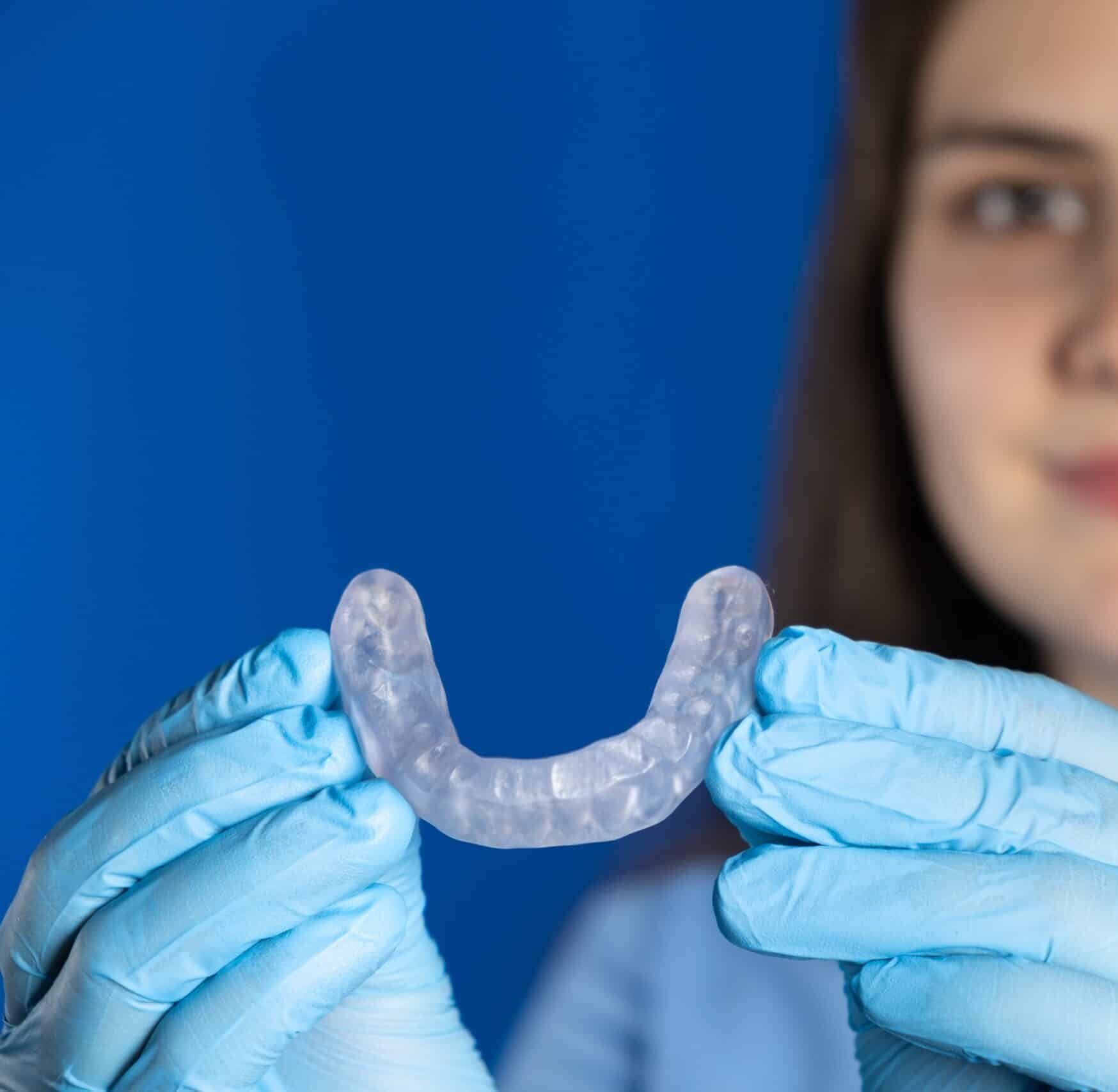
A nightguard creates a protective surface between the upper and lower teeth. Rather than allowing the teeth to press or slide directly against one another, the appliance receives and distributes those forces. This does not necessarily stop the muscles from attempting to clench, but it can reduce the direct damage caused by repeated tooth-to-tooth contact.
The design of the nightguard matters. A properly fitted appliance should remain stable while you sleep and provide balanced contact when your jaw closes. If a guard shifts easily, feels uneven, or changes how the teeth meet, it may be difficult to wear consistently. Our team evaluates the shape of your teeth, your bite relationship, and the location of existing dental work before recommending the most appropriate style.
Nightguards can be especially valuable for patients who have invested in crowns, bridges, veneers, implants, or other restorations. These treatments are built for normal daily function, but ongoing grinding can expose them to forces that are significantly stronger and more repetitive than ordinary chewing.

Custom Nightguards Vs. Over-The-Counter Options
Drugstore nightguards may seem convenient, particularly for someone who wants to try an appliance before visiting a dentist. However, most over-the-counter options use a one-size-fits-all shape or a boil-and-bite material that the patient softens and molds at home. These guards may feel bulky, fit loosely, or create uneven contact across the teeth.
A custom nightguard is made from precise impressions or digital scans of your mouth. This allows the appliance to follow the contours of your teeth and remain secure without requiring excessive thickness. The material and design can also be selected according to your grinding pattern, bite, dental restorations, and comfort needs.
For patients with jaw discomfort or facial pain, fit is particularly important. An appliance that is too soft may encourage additional chewing or clenching in some individuals, while an uneven guard may place unnecessary pressure on certain teeth. At Keller Family Dentistry, Sleep & Facial Pain, we do not view every nightguard as interchangeable. The goal is to provide an appliance suited to your specific oral structures and symptoms.
Preventing Tooth Wear & Damage
Enamel is exceptionally strong, but it is not indestructible. Repeated grinding can gradually wear away the protective outer layer of the teeth. Once enamel is lost, it does not naturally grow back. Continued wear may expose the softer dentin underneath, increasing sensitivity and making the teeth more vulnerable to cracking or further erosion.
The effects of grinding are often cumulative. A patient may not notice a dramatic change from one night to the next, yet small amounts of wear can become significant over months or years. Teeth may begin to look shorter, their edges may become uneven, and the bite may gradually change as tooth structure is lost.
A nightguard helps interrupt this pattern by providing a replaceable barrier. The appliance may eventually show signs of wear, but that damage occurs on the guard instead of the teeth. During routine dental visits, our team can examine both your smile and the appliance for changes. Monitoring allows us to identify whether grinding remains active and whether the guard continues to provide suitable protection.
Reducing Jaw Discomfort
Nighttime clenching can keep the jaw muscles working when they should be resting. This prolonged activity may contribute to morning stiffness, facial pain, temple headaches, or discomfort around the temporomandibular joints. Some people also experience ear-area pressure, limited jaw movement, or tenderness when chewing.
A well-designed nightguard may help reduce muscular strain by guiding the teeth into a more stable position and distributing pressure more evenly. However, jaw discomfort can have several possible causes, and a nightguard should not be treated as an automatic solution for every symptom.
Because Keller Family Dentistry, Sleep & Facial Pain focuses on both oral health and facial pain concerns, we take time to evaluate the full picture. Your assessment may include a discussion of your symptoms, examination of the jaw joints and muscles, evaluation of your bite, and dental x-rays when clinically appropriate. This helps us determine whether a nightguard should be used by itself or as one part of a more comprehensive treatment approach.

Adjusting To Your Nightguard
It is normal for a new nightguard to feel noticeable during the first several nights. Your tongue may explore the appliance, and you may produce more saliva than usual. Some patients also need time to become comfortable speaking while wearing it, although nightguards are generally placed shortly before sleep rather than worn during daily conversation.
Consistency usually makes the adjustment easier. Wearing the appliance each night allows the mouth to become accustomed to its shape and presence. The guard should feel secure and protective, but it should not cause persistent pressure, sharp irritation, or worsening jaw symptoms.
A brief follow-up adjustment may be needed after delivery. Small refinements can improve how the teeth contact the appliance and help it feel more natural. Patients should not attempt to trim, reshape, or heat a custom guard at home, since these changes can affect its fit and protective function.

Cleaning & Maintaining Your Appliance
Proper care helps your nightguard stay fresh, clear, and comfortable. Each morning, rinse it with cool or lukewarm water and gently clean it with a soft toothbrush. Avoid hot water, which may distort the material and change the fit.
Allow the guard to dry before placing it in its ventilated storage case. Keeping it enclosed while still wet can encourage odors and buildup. The storage case should also be cleaned regularly and allowed to dry completely.
Avoid using abrasive toothpaste, bleach, or harsh household cleaners unless our team specifically recommends a product. These materials may scratch or weaken the appliance. Keep the nightguard away from pets, as dogs are often attracted to the scent and can quickly damage it.
Bring your appliance to routine dental visits so we can check its condition and confirm that it still fits properly. Changes in your teeth, dental restorations, or bite may affect how the guard seats. Deep grooves, cracks, rough areas, looseness, or persistent odors may indicate that it is time for professional cleaning, adjustment, or replacement.
Protect Your Smile With Thoughtful, Individualized Care
A nightguard should do more than cover your teeth. It should fit comfortably, support your oral health, and address the forces affecting your smile while you sleep. At Keller Family Dentistry, Sleep & Facial Pain, we combine careful dental evaluation with an understanding of jaw function and facial discomfort. This allows us to create recommendations based on your symptoms and anatomy rather than relying on a generic appliance.
Whether you have noticed worn teeth, recurring restoration damage, morning headaches, or jaw soreness, our team can help identify the likely source and explain your options clearly. Patients in Keller, TX, can feel confident knowing their nightguard will be designed with attention to fit, function, and long-term protection. Schedule an evaluation with Keller Family Dentistry, Sleep & Facial Pain to learn whether a custom nightguard may help protect your teeth and make your mornings more comfortable.